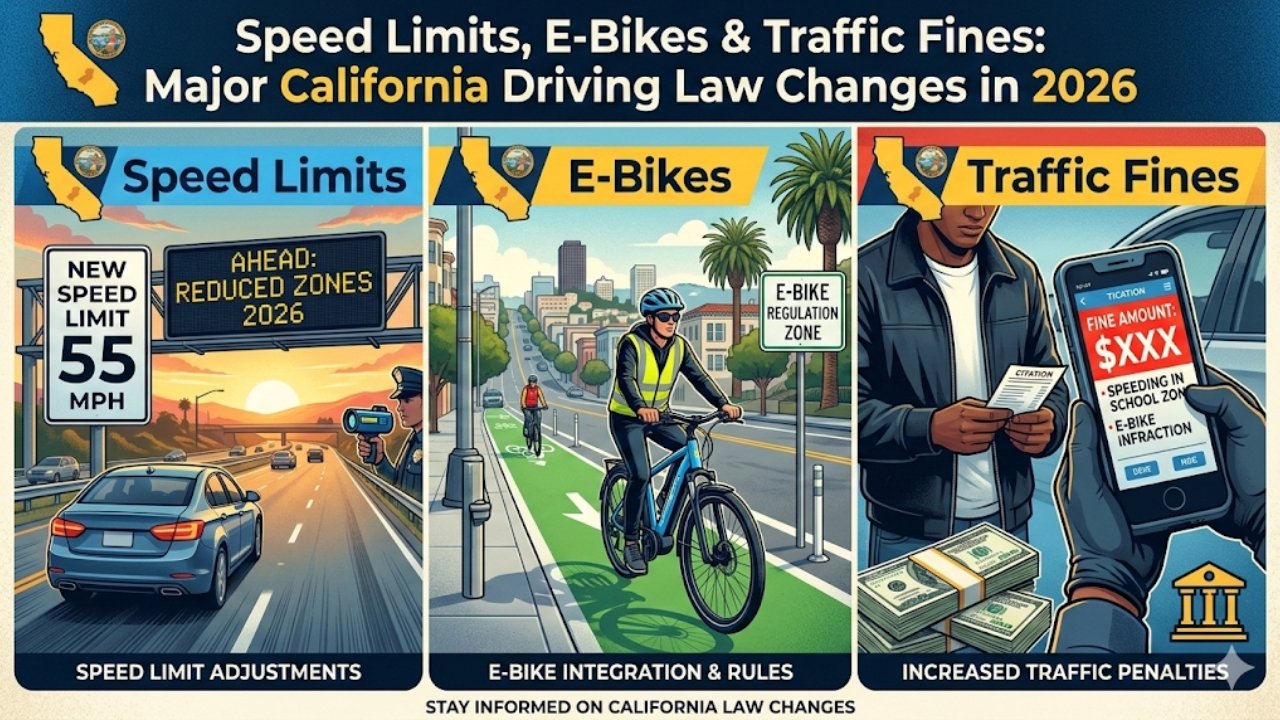
California’s roads are getting safer and stricter in 2026 with fresh laws targeting speed, electric bikes, and penalties. Drivers and cyclists alike need to adapt quickly to avoid surprises.
Lower School Zone Speeds
Local governments across California can now drop speed limits in school zones from 25 mph to 20 mph. This change aims to protect kids during peak hours, with the lower limit becoming automatic statewide by 2031 wherever signs appear. Communities have until then to opt in, giving parents and school officials more control over local safety.
These adjustments respond to growing concerns about pedestrian risks near campuses. Enforcement ramps up with better signage, making it easier for officers to spot violators. Expect more tickets in these areas as awareness spreads.
E-Bike Safety Upgrades
Electric bikes face new visibility rules requiring a red reflector or steady/flashing red rear light at all times, not just after dark. Minors caught without helmets can now complete an online California Highway Patrol safety course instead of paying fines right away. Product standards tighten too, mandating lab-tested batteries and labeling for sales starting this year.
Class 3 e-bikes, which hit up to 28 mph, can’t be sold or operated by anyone under 16, with fines up to $250 for sellers who ignore this. Hacking speed limiters on any e-bike class is banned, turning modified rides into illegal motor vehicles needing registration and insurance.
Key E-Bike Classifications
| Class | Max Assisted Speed | Throttle Allowed? | Typical Access Areas |
|---|---|---|---|
| 1 | 20 mph | No | Bike lanes, paths, trails (local rules apply) |
| 2 | 20 mph | Yes | Bike lanes; throttle often restricted locally |
| 3 | 28 mph | No | Streets, bike lanes; paths frequently banned |
Work Zone Enforcement Boost
Highway work zones launch a pilot using radar and lasers to catch speeders, mailing tickets to vehicle owners. Caltrans gains power to cut speeds by 5 mph in risky spots, issuing warnings for the first 30 days before full fines kick in. These tools address dangers to crews and drivers amid rising construction.
Fines scale with violation severity, prioritizing worker safety. Drivers should watch for new signs and slow down proactively.
Tougher Traffic Fines
New penalties hit repeat offenders and tech-related crimes harder. Autonomous vehicle makers get “notices of noncompliance” for traffic errors caused by their systems. Car theft devices face steeper fines, while e-bike retailers must audit stock for safety compliance or risk bans by 2028.
Youth e-bike rules emphasize education over punishment, but adults face standard infractions. Overall fines aim to deter risky behavior without overwhelming first-timers.
Local vs. State Control
Cities and counties hold sway over paths and trails, often restricting throttle use or Class 3 bikes. Coastal spots and parks enforce speed caps more rigorously now. State laws set the baseline, but checking municipal codes keeps riders legal block by block.
This balance encourages e-bike growth while curbing conflicts in busy areas. Commuters benefit from clearer rules on streets versus recreational zones.
Preparing for Compliance
Riders should verify e-bike labels, add rear lights, and respect school slowdowns. Parents guide kids toward Class 1 or 2 for safety. Retailers stock certified gear to dodge fines. These shifts make California’s roads welcoming yet firm for all users.
Staying informed via CHP resources prevents headaches. Safer habits today build trust for tomorrow’s traffic mix.
FAQs
Q: Do e-bikes need registration in California?
A: No, Classes 1-3 don’t; exceeding limits treats them as motor vehicles.
Q: Are daytime e-bike lights mandatory?
A: Yes, red rear light or reflector required anytime.
Q: Can locals ban e-bikes from paths?
A: Yes, cities and parks set their own access rules.