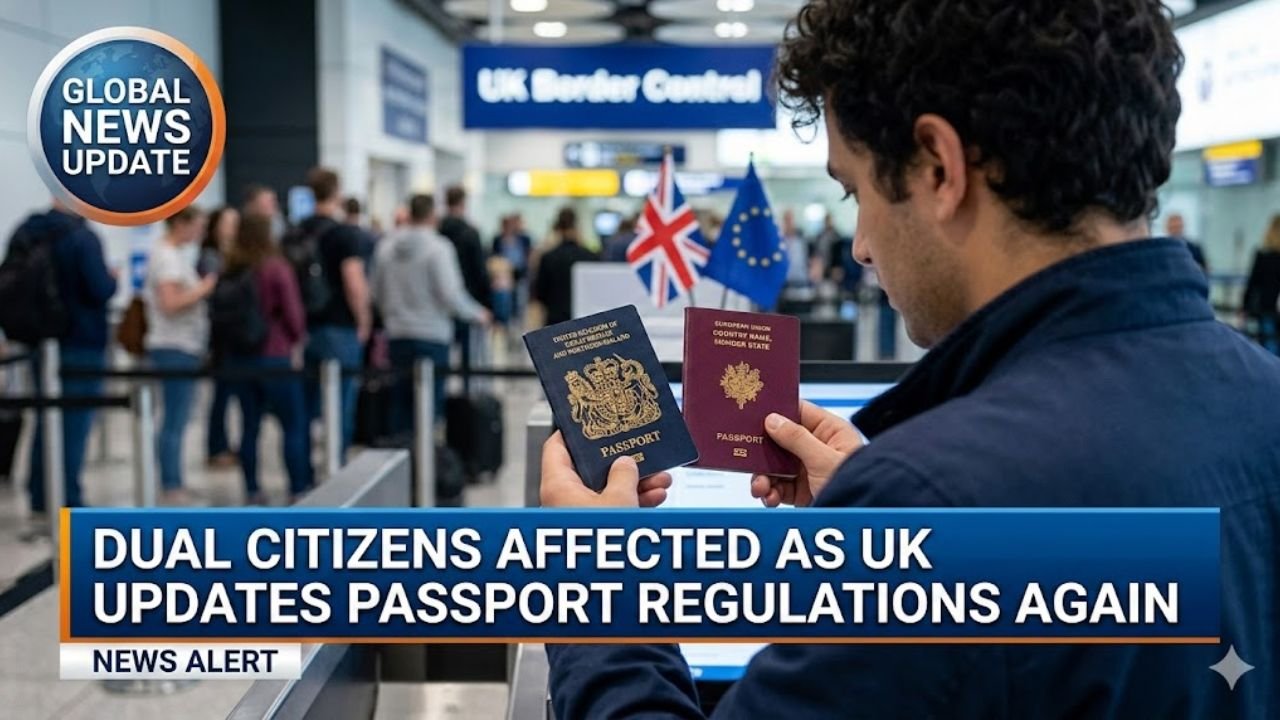
The United Kingdom has entered a new era of border security that fundamentally changes how dual nationals interact with their home country. As of February 25, 2026, the Home Office has fully enforced the Electronic Travel Authorisation (ETA) scheme. While the move aims to digitize and secure the UK’s borders, it has created an unexpected and often stressful hurdle for millions of British dual citizens living across the globe. For decades, many dual nationals traveled freely using their secondary passports; however, under the new “no permission, no travel” policy, this flexibility has effectively vanished.
The Shift to Mandatory British Documentation
Previously, a dual citizen—for instance, someone holding both British and Australian nationality—could board a flight to London using their Australian passport. While it was always “recommended” to carry a British passport, airlines were generally lenient. That leniency ended this week. Carriers are now legally required to verify digital permission before allowing any passenger to board. Since British citizens are ineligible for an ETA (as they are not “visitors”), a non-British passport will now trigger a “no travel” alert in airline systems unless it is linked to a specific proof of citizenship.
The New Requirements for Entry
To avoid being denied boarding at the gate, dual nationals must now present one of three specific forms of evidence. The most straightforward is a valid British or Irish passport. For those who do not wish to maintain a second physical passport, the alternative is a Certificate of Entitlement (CoE) to the Right of Abode. Starting February 26, 2026, the Home Office has also transitioned these certificates to a digital-only format, meaning they are linked to the individual’s foreign passport via a UK Visas and Immigration (UKVI) account.
Essential Travel Documents for Dual Citizens (2026)
| Document Type | Eligibility | Digital Status | Best For |
| British Passport | All British Citizens | Physical (standard) | Regular travelers & ease of use |
| Irish Passport | Dual British/Irish Citizens | Physical (standard) | Residents of NI or Irish nationals |
| Certificate of Entitlement | British citizens without UK passport | Digital (eVisa) | Those preferring a foreign passport |
| Expired UK Passport | Issued 1989 or later | Physical | Emergency travel (Carrier discretion) |
Financial and Administrative Burdens
The update has sparked significant debate regarding the costs imposed on the British diaspora. Obtaining a British passport from abroad can be a lengthy and expensive process, but the alternative—the Certificate of Entitlement—is notably more costly, with fees reaching several hundred pounds. Critics argue that these regulations act as a “stealth tax” on citizens who happen to hold another nationality. For families with multiple children born abroad, the administrative costs of ensuring every member has the “correct” documentation for a trip to the UK can run into the thousands.
Temporary Concessions and Carrier Discretion
Recognizing the potential for chaos during the initial rollout, the Home Office has provided a slim window of flexibility. Carriers currently have the discretion to allow boarding if a traveler presents an expired British passport issued in 1989 or later, alongside a valid foreign passport from a non-visa country (like the US, Canada, or EU members). However, this is not a guaranteed right. If an airline’s system does not recognize the documentation, they are encouraged to refuse boarding to avoid heavy government fines. Travelers are urged not to rely on this concession for long-term planning.
The Impact on Global Mobility
This regulatory update is part of a broader global trend toward “contactless” borders. While the technology promises to reduce queues at Heathrow or Gatwick, it places the burden of proof squarely on the traveler before they even reach the airport. For the estimated 1.2 million British dual citizens living overseas, citizenship is no longer just a legal status; it is a digital credential that must be meticulously maintained. Business travelers, in particular, are finding that their employer-led travel policies now require urgent audits to ensure no executive is stranded due to an outdated secondary passport.
Navigating the Digital Transition
As the UK moves toward a fully digital border by the end of 2026, the importance of the UKVI account cannot be overstated. Dual citizens using the new digital Certificate of Entitlement must ensure their account is updated every time they renew their foreign passport. Failure to sync these digital records will result in the same boarding denials that the system was designed to implement. The transition marks the end of an era where “belonging” to the UK was a simple matter of heritage; today, it is a matter of digital synchronization.
FAQs
Q1 Can I still travel to the UK with just my US or Australian passport?
No. As a dual citizen, you cannot apply for an ETA. Airlines will deny boarding unless you also present a valid British/Irish passport or a digital Certificate of Entitlement.
Q2 What if my British passport is expired?
There is a temporary concession allowing expired passports (issued after 1989) if the details match your current foreign passport, but this is at the airline’s discretion. It is highly recommended to renew your passport immediately.
Q3 How much does the Certificate of Entitlement cost?
The fee is significantly higher than a standard passport renewal, often exceeding £500. Most experts recommend simply renewing your British passport as the more cost-effective and reliable long-term solution.